Optlo alternative with the AI inside the plan, no key of your own
Compare Optlo with the AI agent if your SaaS needs to resolve repetitive tickets with real account state.
Three patterns among teams coming from Optlo
Nobody switches tools because another one looks nicer. You switch when something specific starts to hurt, and these are the three reasons teams coming from Optlo tell us about.
You set up the AI yourself
Open an OpenAI or Anthropic account, create the key, pick the model and watch the token spend. That is control, and it is work someone on the team has to do and maintain.
The agent does not see the account by default
It answers with your web sources and notes. For it to know the plan or permissions of who is asking you wire it into a workflow; without that, the account question ends up with a person.
Email and web chat, and that is it
They write it themselves: no voice, SMS or social, and no ticketing engine with SLAs. If you serve WhatsApp or need priorities and shifts, half is missing.
Capturing the question is the easy part.
Finishing it is the hard one.

How do I invite someone to the team?

Where can I change the billing details?

Can someone help me set this up?

I cannot access the dashboard.

Why do I not have permission for this?

The integration is throwing errors.

Is this included in my current plan?

How do I connect this to Slack?

Can you explain how this flow works?

Can I change the billing contact?
Both do support, but not the same support. Optlo is built to handle conversations; Intake is built to close the repetitive ones without anyone reading them.
A well-organized queue is still a queue. The question is not whether your conversations are tracked, but how many of them a person still has to touch to close.
01
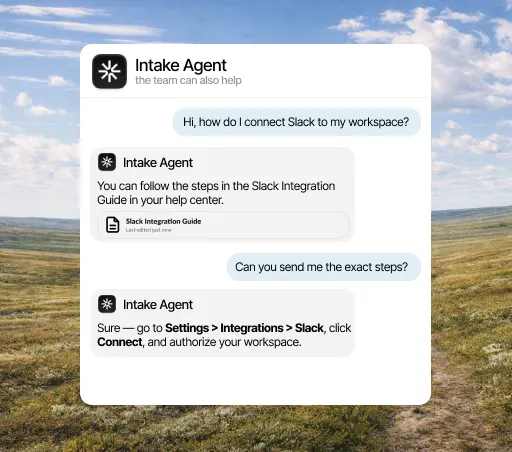
Real account context
The agent reads plan, settings, usage, and history before answering, not just what is in a help article.
See the inbox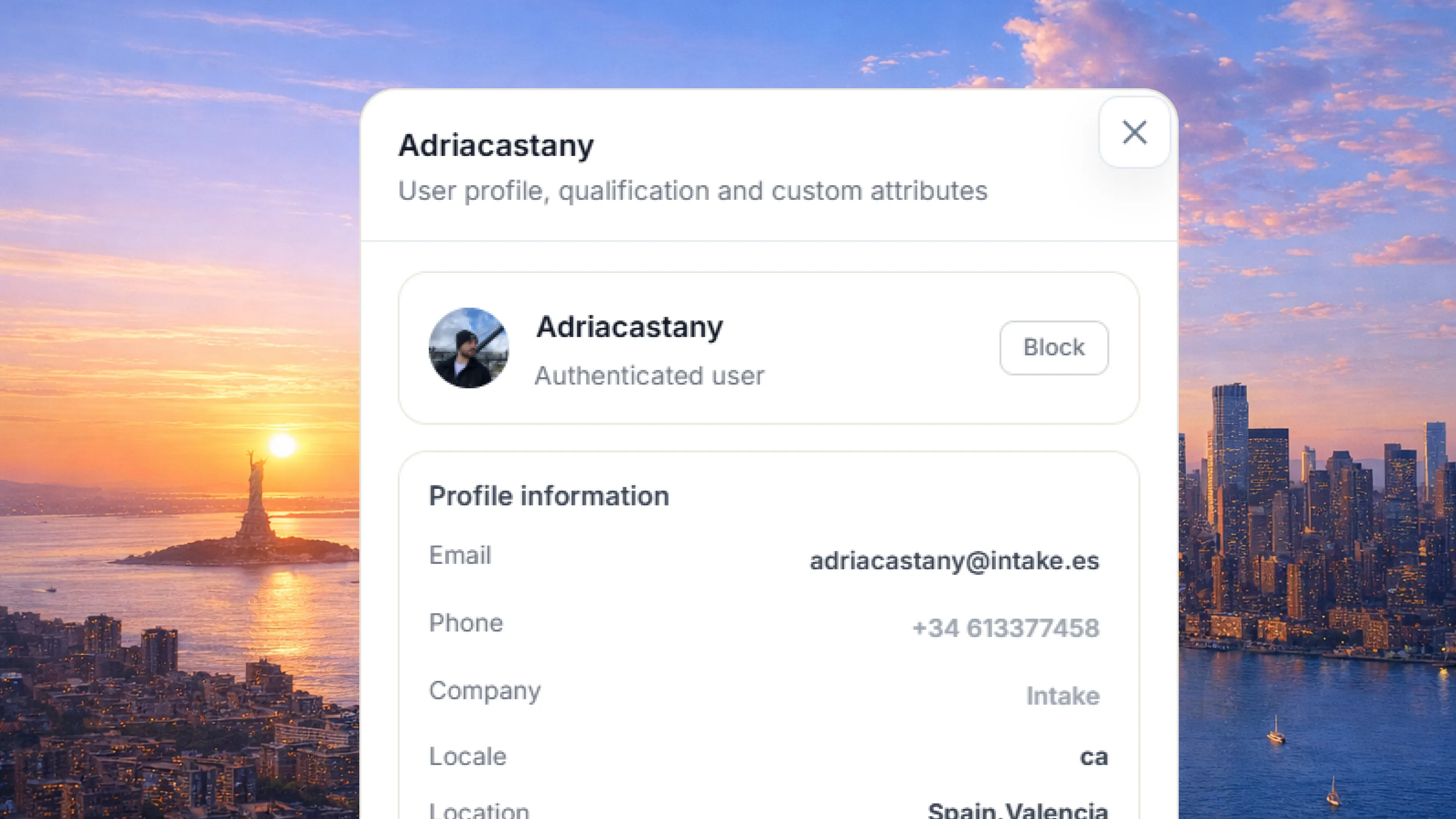
02
Executes actions, not just answers
Connected to your API, the agent completes the customer request inside the conversation instead of explaining how to do it.
See actions03
Hands off with full context
When a person is needed, the conversation reaches your team with the history, account state, and an internal note on what was already tried.
See the handoff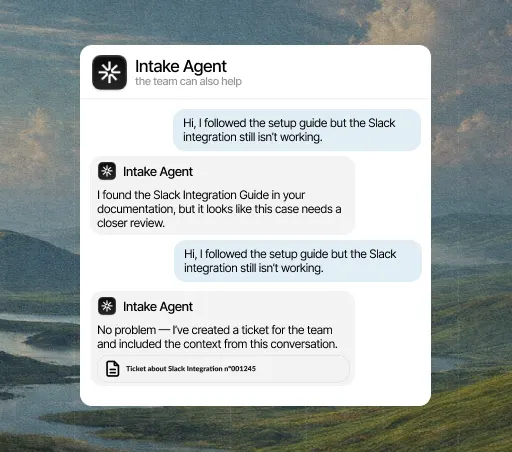
The decision
When to choose the agent
If several of these describe you, the switch pays off. If not, Optlo still serves you today, and there is no reason to move a tool that works. But the useful question is not which is better in the abstract: it is how much of your queue is repetitive. Once it passes half, the maths does itself, and the cheap way to check is a ten-day trial with no card.
See pricing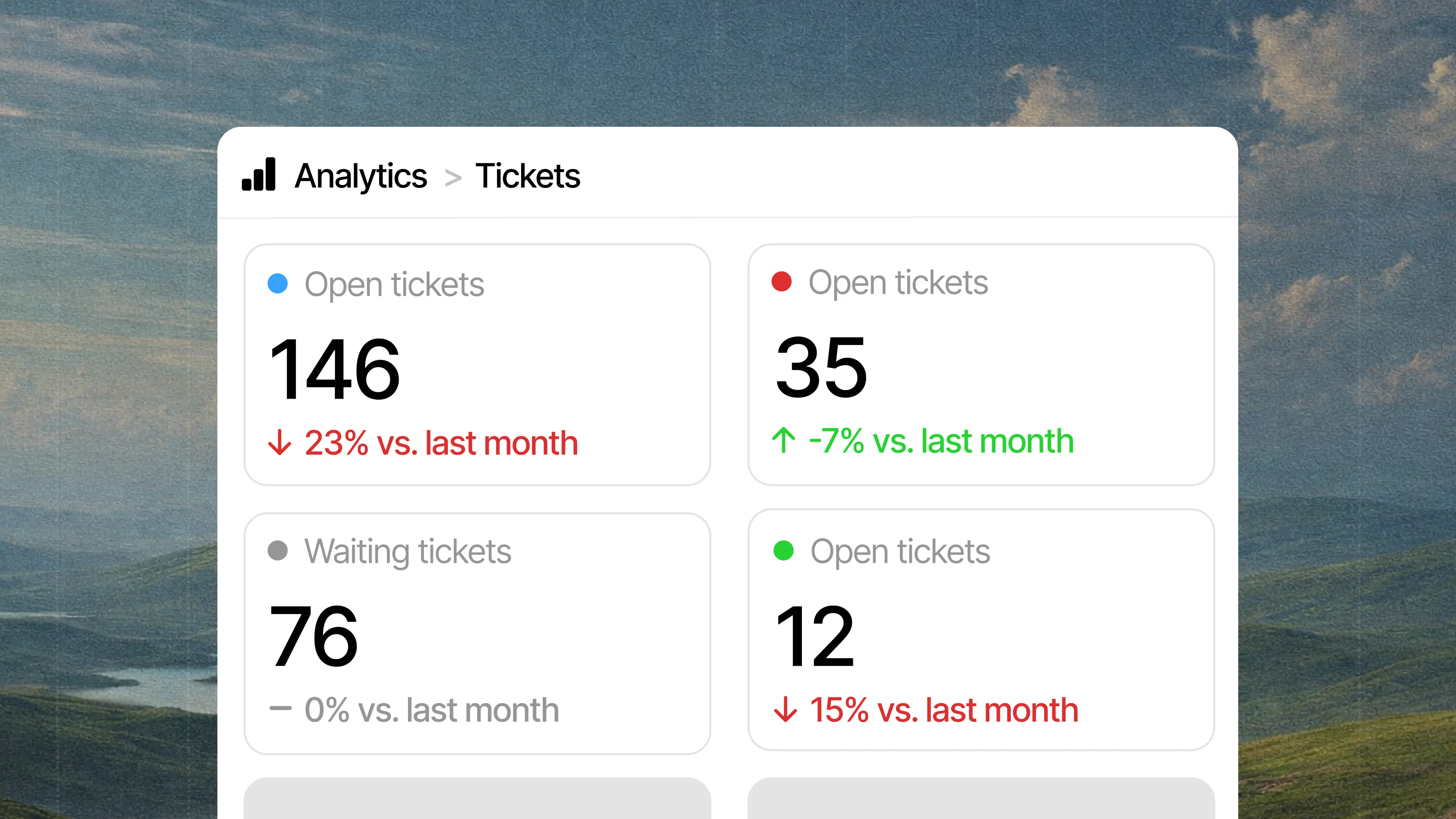
Since you’re weighing options
Where Intake shines over Optlo
Row by row, with what Optlo publishes rather than what suits us. In text, not yes or no: in support the nuance is what decides.
| Criterio |  Intake Intake | |
|---|---|---|
| Pricing model | SíA flat plan by conversations, from 49 EUR a month on annual billing, AI included. No seats and no separate token bill. | NoFlat platform plan —Starter $16 and Growth $49 a month on annual billing ($19 and $59 monthly)— plus the tokens from your AI provider, which you pay separately. Extra seats are $15 a month each. |
| Which model answers | SíThe one Intake picks and maintains: no OpenAI account to open and no token spend to watch. | NoThe one you choose with your own OpenAI, Anthropic or Google key, mixing models per step and editing the system prompt. |
| What the agent knows | SíYour documentation and the account state in your product: plan, settings, usage. It runs actions on your API. | NoYour web sources and notes, with workflows you configure. It sees the customer account if you wire it into a workflow. |
| Channels | SíWeb chat, email, WhatsApp, Slack and help center, in one inbox. | NoEmail and web chat. They write themselves that voice, SMS and social are not covered. |
| Human handoff | SíInbox with teams, priorities and SLAs; the handoff arrives with the history and the account already checked. | NoShared inbox and handoff to a person, without a ticketing engine with SLA clocks or shift routing. |
| When the other is the better fit | — | SíIf you want to choose the model and watch the token spend in your own provider dashboard. For a technical team that already has an OpenAI or Anthropic account and prefers to control the system prompt by hand, that is their ground. |
Reflects each product’s publicly documented behavior as of September 2026. The row where Intake has no mark is where the other fits better: it is there so you don’t find out on a call.
Migration
How to approach moving from Optlo
You do not need to change everything at once. Start with repetitive tickets, the account data needed, and the moments where a person should step in.
See how Intake fits SaaS teams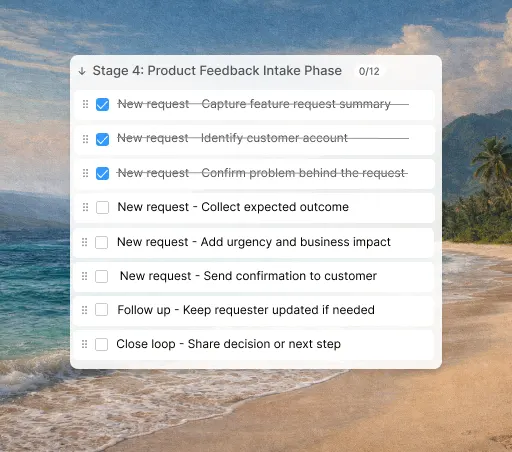














Connect what you already use
If you bring something over from Optlo, it connects from settings; so does the rest of the stack.
See all integrationsPrivacy, control, and human oversight
The agent is designed to work with customer data in a controlled way, with secure access and human decisions when they matter.
FAQ about the agent and Optlo
How much does Intake cost?
A flat plan by conversations: 200 a month for EUR 49 on annual billing (EUR 59 monthly), 800 for EUR 129 and 2,000 for EUR 289. Month to month, EUR 59, 159 and 359. VAT excluded, and there is no per-seat charge.
What counts as a conversation?
One resolved thread, however many messages it takes. A customer who asks three follow-up questions in the same thread counts once.
What happens if I go over the limit?
The agent stops until the next cycle and your team keeps answering. There is no overage charge, no service cut and no surprise on the invoice.
What data does the agent read?
Your documentation and the account state you expose through your API: plan, settings, usage and whatever else you decide. You define the endpoints and how far it can go.
Which languages does it answer in?
It answers in the language of the question, even when the article is written in another one.
How long does it take to get running?
You connect the help center you already have and it answers from there. Actions against your API take longer because you decide which endpoints to expose, but nothing needs rewriting to start.
Why choose Intake instead of Optlo?
Because if your customers ask about billing or permissions, a generic article from Optlo will not help. You need the AI to check the data, take the action, and hand off to your team when it cannot.
Do I have to drop Optlo to try Intake?
No. Most teams keep Optlo running and point Intake at their most repetitive tickets first. If it does not deflect them, you have lost ten days and no money.
Is there any case where Optlo is the better choice?
Yes, and the table above says which. We would rather you read it here than find out after signing. That said, the case where Optlo wins is usually a team with settled processes and little repetitive volume. If yours is the opposite —the same question twenty times a month, and answers that depend on each customer's plan— the answer is Intake, and the ten-day trial shows you without having to take our word for it.