When it acts
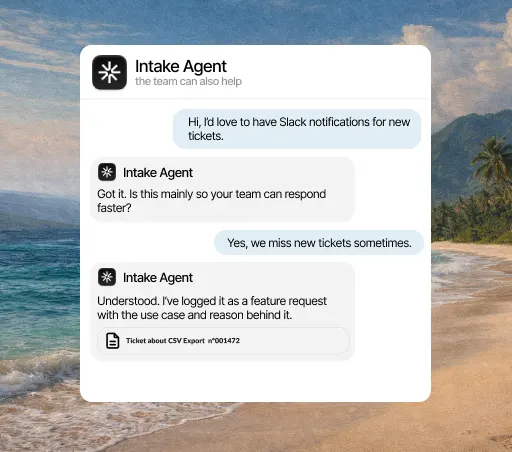
- When a new conversation arrives in Intercom
- When the customer replies
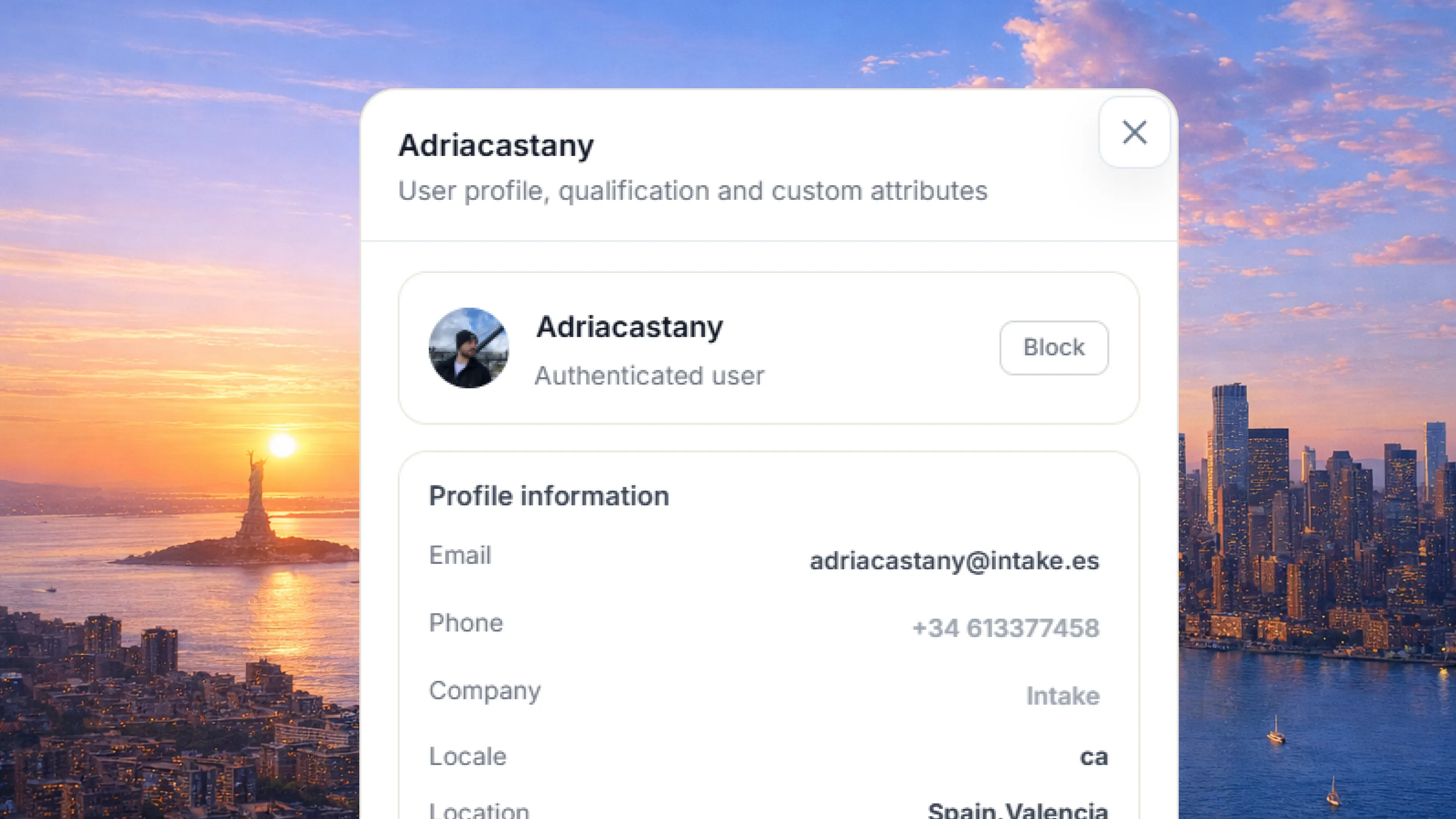
Intake answers repeat questions and takes actions using each customer’s account data. If a person is needed, it creates the ticket in Intercom with everything it has already seen and checked.
What it solves
In an Intercom inbox, most conversations are the same old questions about billing, permissions or limits. The agent gets there before your team, closes them with the documentation and that account’s data, and leaves only what needs a person in the queue.
What it solves
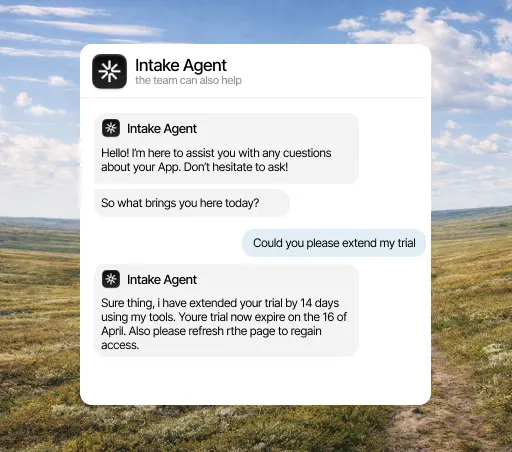
Nobody wants to migrate an inbox with two years of history just to test whether AI works. The agent works inside Intercom: your views, assignments and reports stay where they are. If it doesn’t take questions off your plate within a month, you disconnect it and nothing has changed.
What it solves
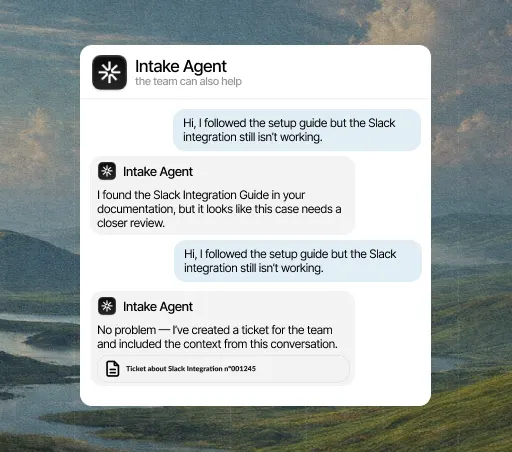
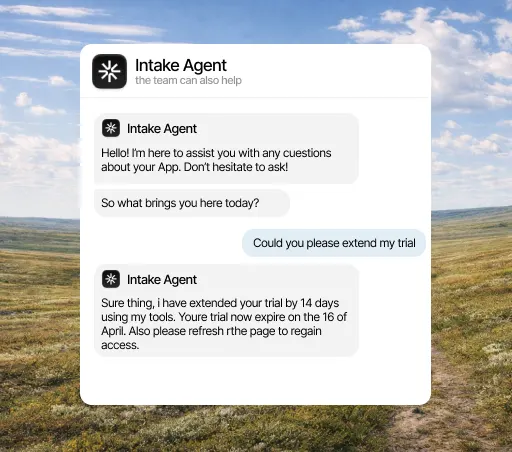
When the agent can’t close something, it leaves it in the queue with what it already checked, the account data it looked up and why it stopped. Whoever picks it up skips the first five minutes of every ticket, which are always the same.
What it does
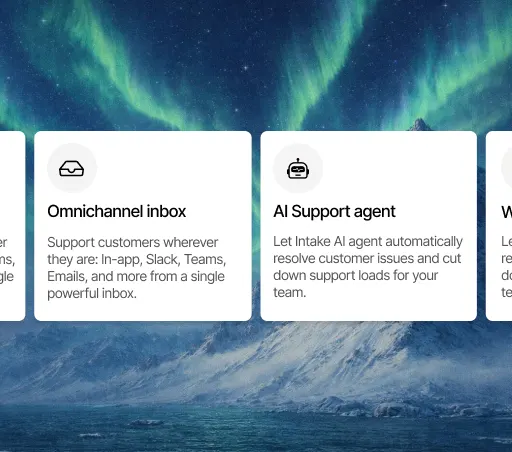
What counts in an integration is what it lets the agent do. This is the data Intercom brings and what the agent does with it on its own.
When it acts
What it can do
Three concrete things that change your team’s day.
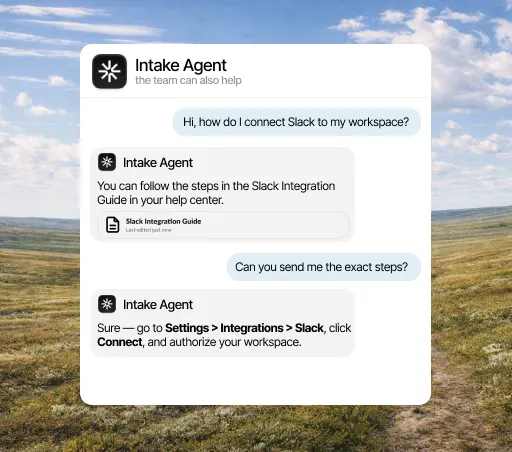
Besides sending links, Intake looks up data and completes requests before bothering your team.
If it can’t resolve the question, it creates the conversation in Intercom so your team can take it from there.
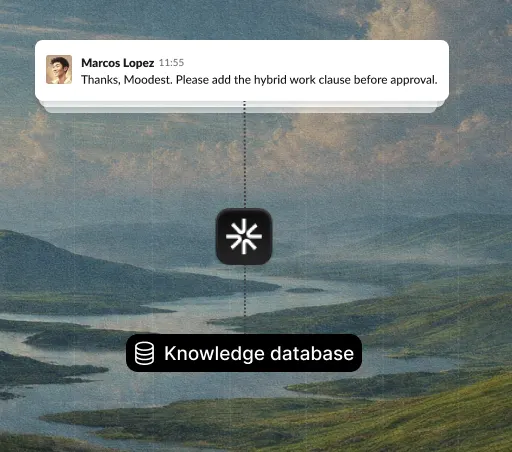
Your team sees in Intercom everything the customer asked and what Intake tried before handing it over.
Three steps, and only the first needs a Intercom admin. You can change the rest later without reconnecting anything.
Open the integrations panel, pick Intercom and authorize access with the account your team already uses. You need admin rights in Intercom, so if you don’t have them, this is the only step you’ll have to ask someone for.
Select the channels, events and account fields it can access. Anything you don’t select stays hidden from it, and you can change it anytime without reconnecting.
From the first conversation, the agent checks that data before replying, resolves what it can close on its own and hands the rest to a person, with the case already prepared.
A few minutes. You authorize access and choose what it can see; nothing needs rewriting and no development work is needed to start.
Yes, from either side: by revoking the connection in Intake or removing the permission in Intercom. The agent stops reading that data right away and keeps answering with everything else.
No. Every integration is included in the plan, from €49 a month. There are no add-ons to buy and no per-call charges.
The agent answers with what it does have and, if the question depended on that data, hands the conversation to a person and explains why. It never makes up data it couldn’t look up.
The conversation closes automatically and, if you set it up, is logged in Intercom as a resolved ticket for your reports.
Yes. Intake can answer first, connected to your product, and pass to Intercom only what needs your team.