When it acts
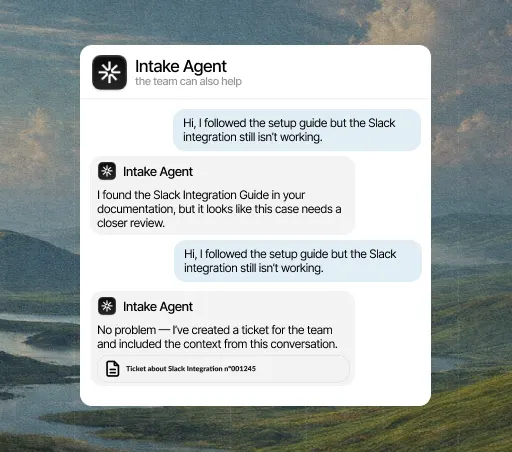
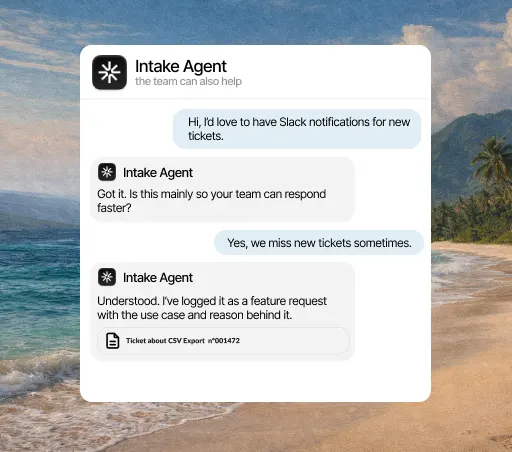
- When a conversation is resolved or handed to a person
- When a Zap sends a webhook
With Zapier, the agent receives events and account data from any of your tools, and you trigger whatever you need when a conversation is resolved or handed to a person.
What it solves
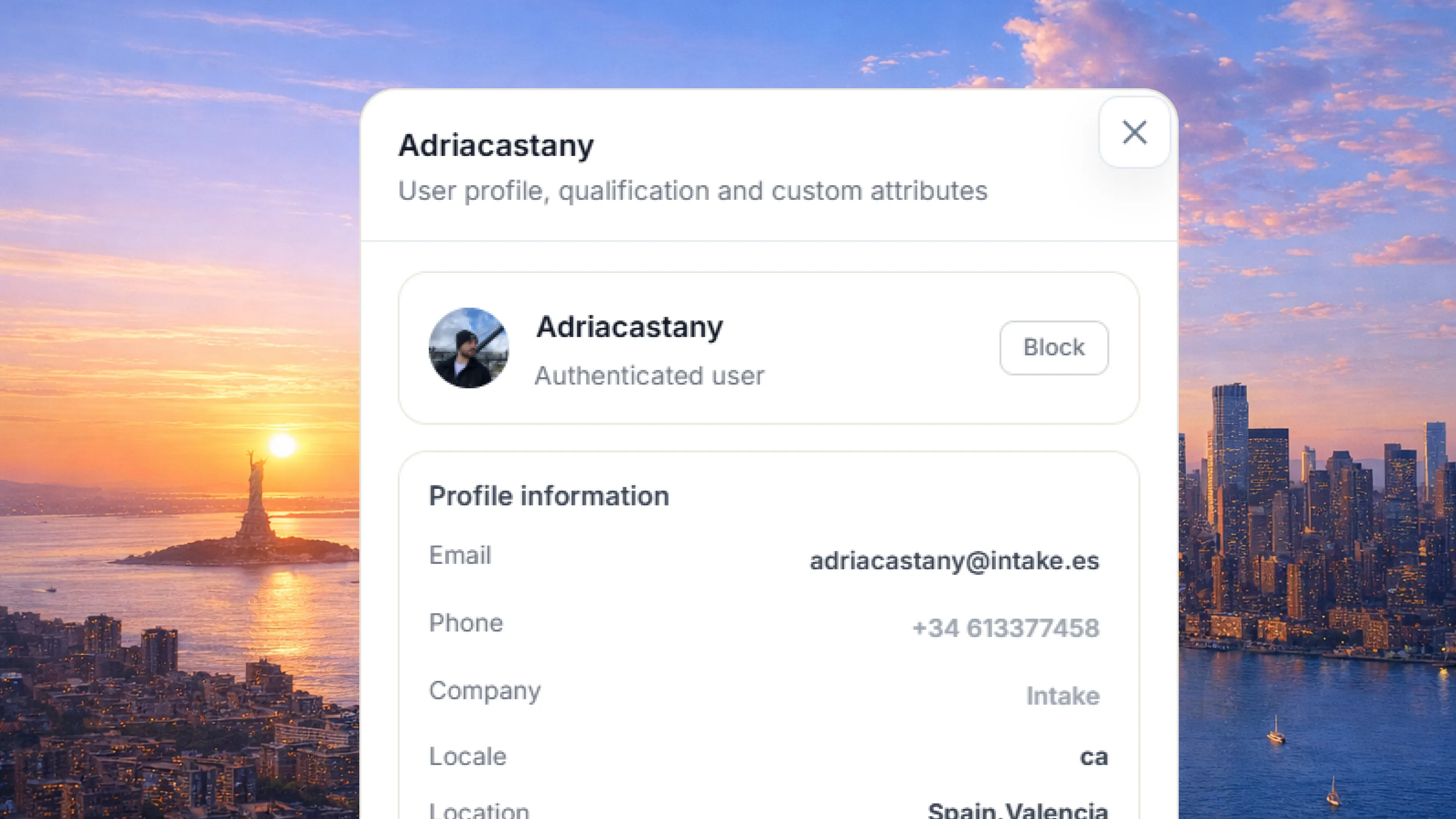
The data the agent needs to close a question often exists, but in a tool with no dedicated integration. Asking for that connection puts it in the product queue, which takes months. With Zapier, the same data arrives this afternoon and nobody writes code.
What it solves
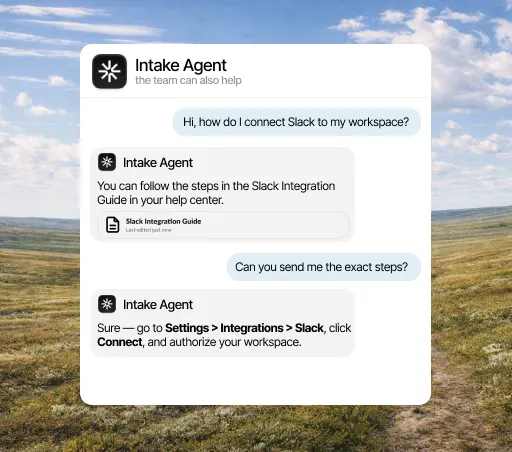
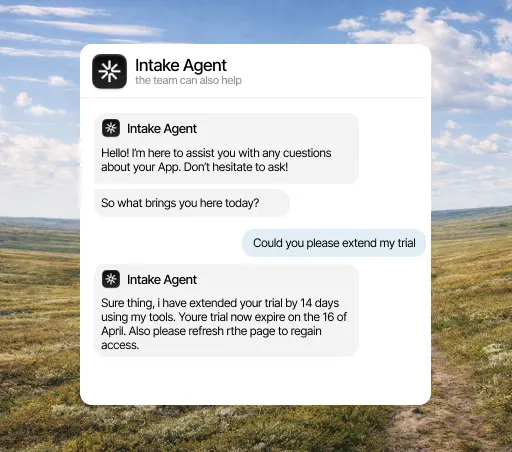
Every team has its place: a sheet, a channel or a board. Make them check a new one and they’ll stop checking it. When the agent hands a conversation to a person or spots something, the Zap sends it where you already are, in the format you choose.
What it solves
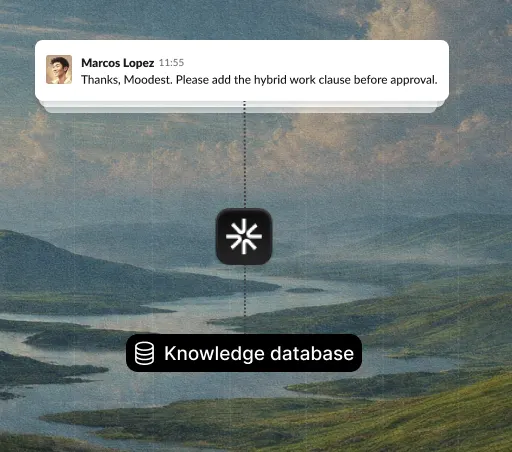
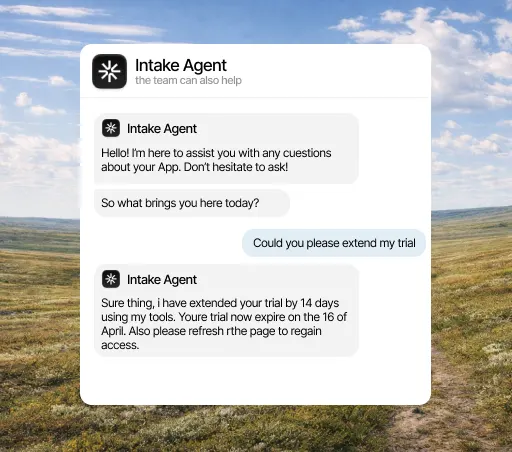
A Zap takes an afternoon to build and five minutes to remove. It’s the cheap way to find out whether that data improves the answers before you request a dedicated integration. If it works, you know it’s worth it; if not, you haven’t spent a sprint finding out.
What it does
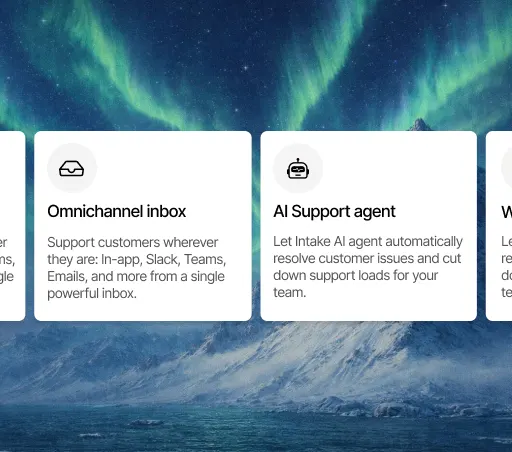
What counts in an integration is what it lets the agent do. This is the data Zapier brings and what the agent does with it on its own.
When it acts
What it can do
Three concrete things that change your team’s day.
If the tool is on Zapier, the agent can read from it or write to it without anyone writing code.
When the agent hands a conversation to a person, the Zap posts it to the channel, sheet or task your team already checks.
A Zap takes an afternoon to set up, so you have the data before deciding whether it deserves a dedicated integration.
Three steps, and only the first needs a Zapier admin. You can change the rest later without reconnecting anything.
Open the integrations panel, pick Zapier and authorize access with the account your team already uses. You need admin rights in Zapier, so if you don’t have them, this is the only step you’ll have to ask someone for.
Select the channels, events and account fields it can access. Anything you don’t select stays hidden from it, and you can change it anytime without reconnecting.
From the first conversation, the agent checks that data before replying, resolves what it can close on its own and hands the rest to a person, with the case already prepared.
A few minutes. You authorize access and choose what it can see; nothing needs rewriting and no development work is needed to start.
Yes, from either side: by revoking the connection in Intake or removing the permission in Zapier. The agent stops reading that data right away and keeps answering with everything else.
No. Every integration is included in the plan, from €49 a month. There are no add-ons to buy and no per-call charges.
The agent answers with what it does have and, if the question depended on that data, hands the conversation to a person and explains why. It never makes up data it couldn’t look up.
Not for a one-step Zap; multi-step flows need one of their paid plans. That cost is Zapier’s, not Intake’s.
Whatever you choose when you build it. The agent sends the conversation details and you decide which fields go out.