Kustomer alternative with published pricing for small teams
Compare Kustomer with Intake if your team keeps answering the same questions and the answer depends on each customer's data.
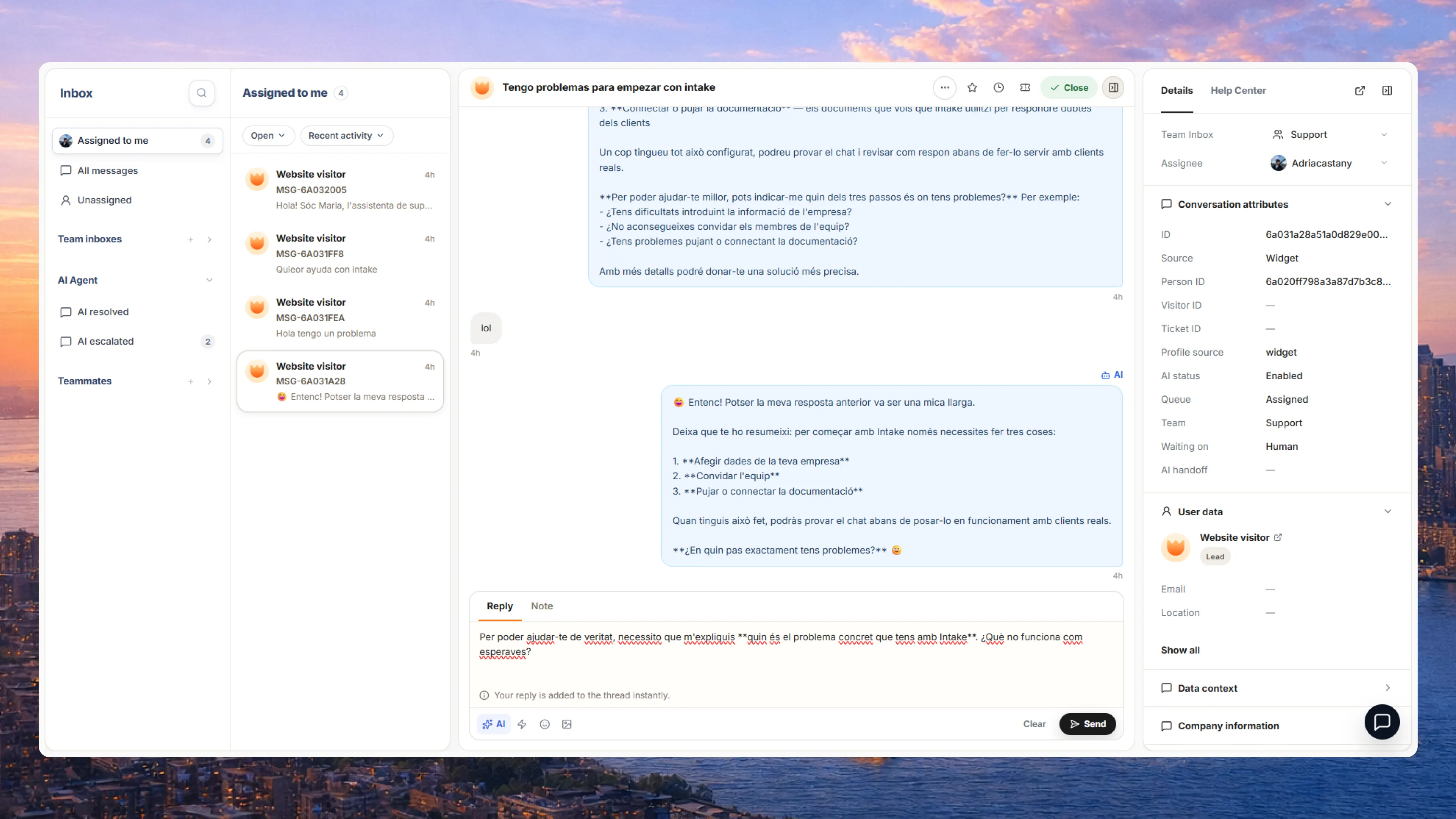
In short
Intake or Kustomer?
Kustomer fits if you are a large retail or travel brand with multi-channel support and a team counted in dozens: it is built for that and we are not. Intake fits if your team fits in a room: we publish our price, from 49 EUR a month on annual billing for 200 conversations, while Kustomer routes you to a questionnaire and to sales.
Trusted by teams at:









- and 20+ more companies
Three reasons to look for a Kustomer alternative
They weigh most when the team is small and the answers depend on each customer’s data.
Heavy for a 3 to 15 person team
Service catalogs, approval flows, ITIL. It does things you will not need, and each one has to be configured.
Months of rollout before you start
Consultants, owners and months of rollout, when nobody does support full time yet.
Data, AI and team in different places
Customer data in one system, the AI in another and the person in a third. The conversation crosses all three.
Receiving the question is easy. The hard part
is resolving it.

How do I invite someone to the team?

Where can I change the billing details?

Can someone help me set this up?

I cannot access the dashboard.

Why do I not have permission for this?

The integration is throwing errors.

Is this included in my current plan?

How do I connect this to Slack?

Can you explain how this flow works?

Can I change the billing contact?
The difference is in the questions that repeat. With Kustomer, the ones that depend on each customer’s data usually end up with someone on your team. Intake answers them by checking that data and passes to a person only what it cannot resolve.
Having your conversations organized helps, but it does not close them. What matters is how many a person still has to answer.
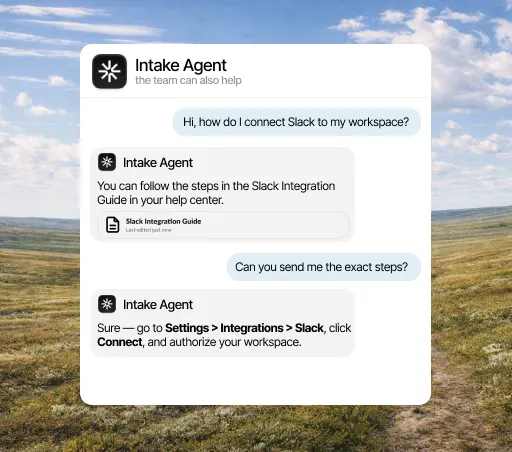
01
Checks the account before answering
Before replying, the agent looks at that customer’s plan, settings, usage and history, as well as your documentation.
See the inbox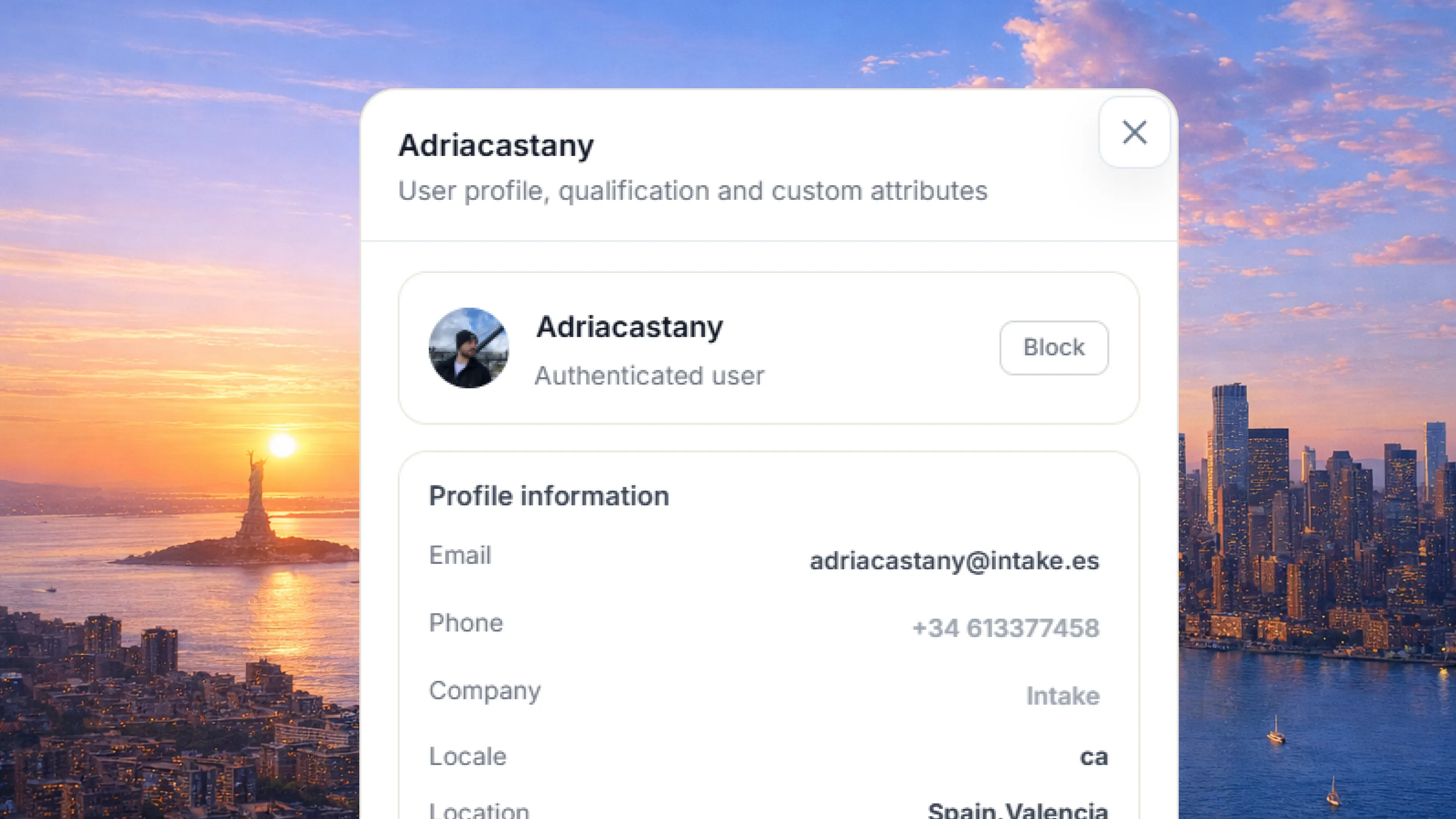
02
Gets the task done in the conversation
Connected to your API, the agent does what the customer asks, like extending a trial or changing a plan, instead of explaining how.
See actions03
Passes to a person what it cannot resolve
The conversation reaches your team with the history, the account data and an internal note on what has already been tried.
See the handoff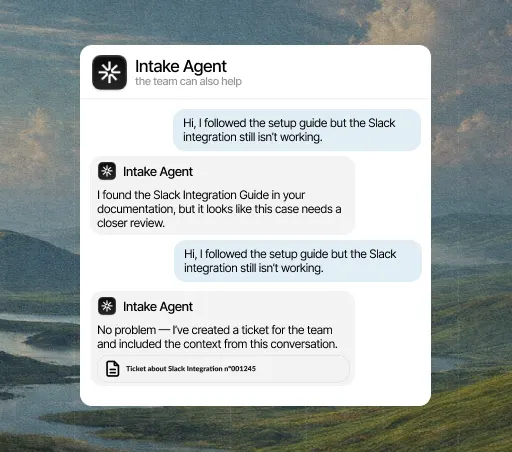
The decision
When switching pays off
It pays off if your team answers the same questions every week and the answer depends on each customer's data: their plan, their invoice, their order. If that is not you, Kustomer still does the job and there is no reason to replace a tool that works. To find out, look at how much of your queue repeats. A ten-day trial with no card is enough to see it.
See pricing
Comparison
Intake and Kustomer, point by point
Row by row, from what Kustomer publishes on its own site. Each row is a sentence, because a yes or no rarely tells you enough.
| Criterio |  Intake Intake | |
|---|---|---|
| Published price | Sí: Flat plans from 49 EUR a month for 200 conversations. It is on the site and you can work it out. | No: They do not publish pricing: they explicitly say they do not post one-size-fits-all rates and route you to a questionnaire and to sales. |
| Who they target | Sí: Customer support, and only that. | No: Large retail, financial services, travel and healthcare accounts, with company brackets reaching past a thousand employees. |
| How you start | Sí: You sign up and try it for ten days without talking to anyone. | No: By filling in an assessment and going through a call. |
| The data model | Sí: The account in your product: plan, permissions, usage and billing, read through your API. | No: The customer record and their history, in the style of a conversation CRM. |
| When the other is the better fit | — | Sí: If you are a large retail or travel brand with multi-channel support and a team counted in dozens, Kustomer is built for that and we are not. If your team fits in a room, the price they do not publish is usually the answer to why this page interests you. |
Based on what each product publishes, as of October 2026. The row with no Intake mark is the case where Kustomer is the better fit.
Depending on your case
Situation by situation, which one fits
It depends on the size of your team and the kind of question you get most. These are the usual situations, including the ones that do not favor us.
You already run large service processes across multiple departments.
Kustomer Kustomer is built for that scale of operation.You are a small team that does not need a full suite yet.
Intake Intake gets started without a long implementation project.You care more about the AI seeing your product data than about managing service processes.
Intake Intake checks each customer’s plan, settings and usage.You pay per-seat licences for people who open the tool twice a month.
Intake Intake charges for conversations, not people. Someone who logs in to look costs nothing.You want the AI to take the action, not open a case for someone else to take it.
Intake The agent calls your API with the permissions you grant and closes the thread itself.
Step by step
How to move from Kustomer
You do not have to switch everything at once. Start with the questions that repeat most, connect the account data needed to answer them and decide when a person should step in.
See how Intake fits SaaS teams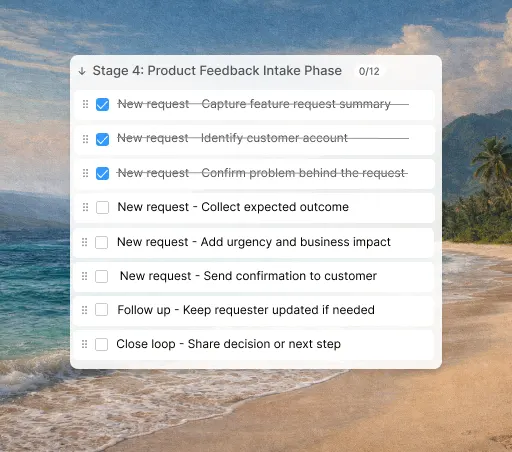














Your customers’ data,
in the EU and under your control.
Intake runs on AWS in the European Union and complies with GDPR. The agent only reads and does in your systems what you allow, and your team can review every answer.
- GDPR
- Data in the EU
- AWS with SOC 2
Questions about Intake and Kustomer
How much does Intake cost?
A flat plan by conversations: 200 a month for EUR 49 on annual billing (EUR 59 monthly), 800 for EUR 129 and 2,000 for EUR 289. Month to month, EUR 59, 159 and 359. VAT excluded, and there is no per-seat charge.
What counts as a conversation?
One conversation thread, however many messages it takes. A customer who asks three follow-up questions in the same thread counts once.
What happens if I go over the limit?
The agent pauses until the next cycle and your team keeps answering. There is no overage charge or service cut, and the invoice does not change.
What data does the agent read?
Your documentation and the account data you expose through your API: plan, settings, usage and whatever else you decide. You choose which lookups it can make and how far it goes.
Which languages does it answer in?
It answers in the language of the question, even when the article is written in another one.
How long does it take to get running?
You connect the help center you already have and it starts answering from there. Actions against your API take a little longer because you choose what the agent can do, but nothing needs rewriting to start.
Why choose Intake instead of Kustomer?
Because when your customers ask about their invoice or their permissions, a generic article does not solve it. Intake checks the data, takes the action and passes to your team what it cannot resolve.
Do I have to drop Kustomer to try Intake?
No. The usual way is to keep Kustomer and start Intake on the questions that repeat most. If it does not resolve them, you have lost ten days and no money.
Is there any case where Kustomer is the better choice?
Yes, and the table above says which. It is usually a team with settled processes and few repeated questions. If yours is the opposite, with the same question twenty times a month and answers that depend on each customer's plan, Intake is the better fit, and the ten-day trial lets you check.