Filtering is not answering and forwarding
A front line that forwards everything with a "let me get somebody who knows" is not filtering.
It adds a step and a customer who has already explained their case once. The value is in what it resolves and, when it cannot, in the information it leaves for whoever comes next.
Why it matters
Because it protects the time of the expensive people.
A team with no front line sends every question straight to whoever knows the product deeply, and that person ends up explaining how to change a password instead of fixing what only they can fix.
What it resolves and what it passes on
The boundary is written down, so it does not depend on who is in that day.
- It resolves the how-to questions that are documented.
- It resolves simple account tasks, such as access or a contact detail.
- It collects the missing information before passing a case on.
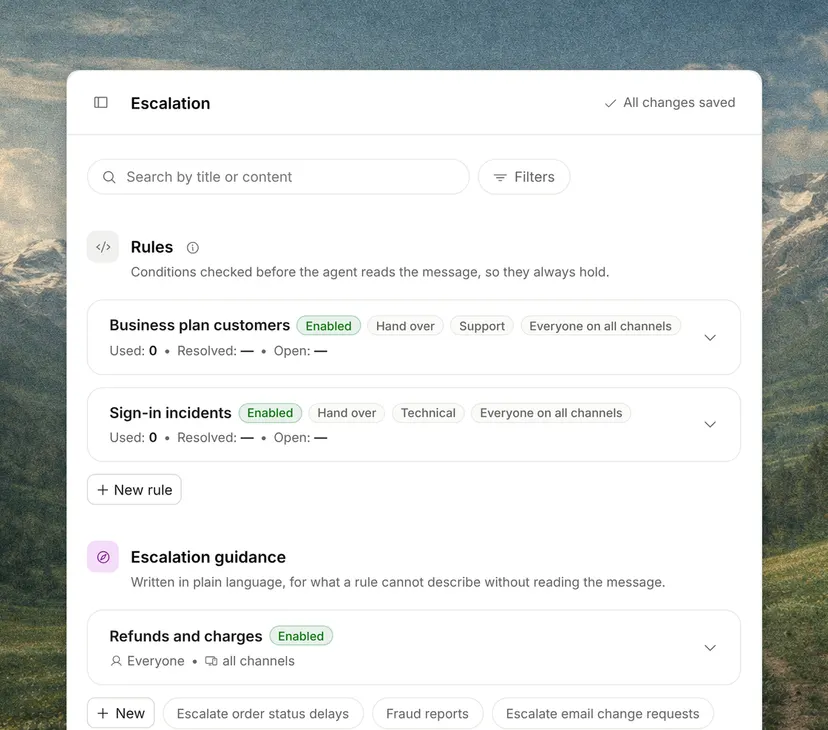
- It passes to second tier what requires looking at the account in depth.
- It passes bugs to product, with the steps to reproduce them.
What it needs to work
Good documentation and access to customer data.
Without the first it does not resolve; without the second it cannot even diagnose. A front line with neither is a mailbox with a person attached.
Where an AI agent fits
It is the layer that automates best, because its job is exactly the repeated and the documented.
On top of that, an agent with access to account state also closes part of what today moves up to the second tier.
What to measure
The share it resolves without escalating and, of what it escalates, how much comes back for lack of information.
The second figure says whether the filter works or merely distributes.