Protocol, script and SLA
The protocol says how the work is done.
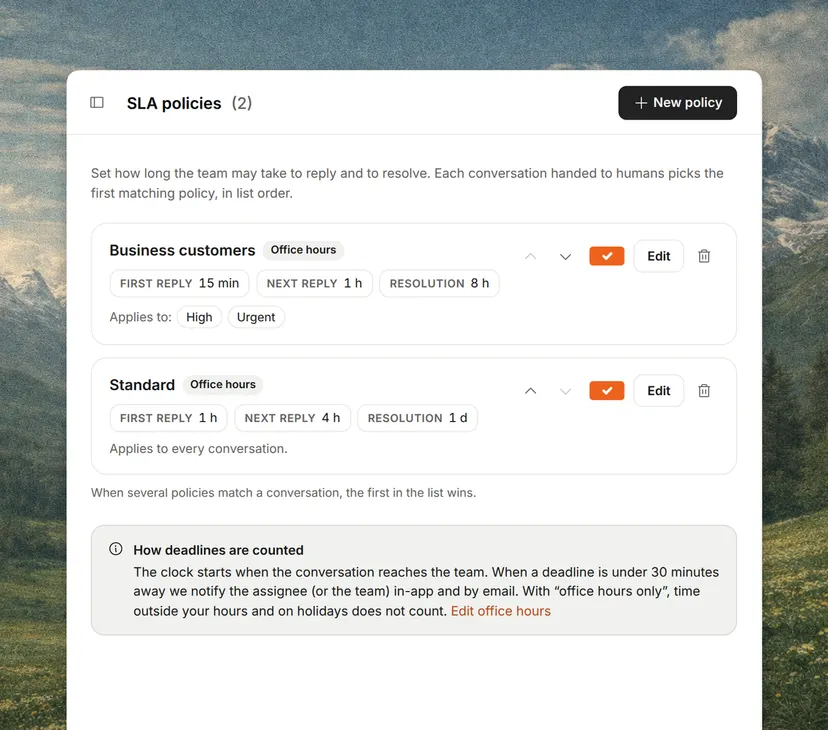
A script is the actual wording for one situation, and it is part of the protocol. The SLA is the deadline commitment to the customer, which the protocol helps to meet. A protocol made only of sentences to copy is a collection of scripts.
Why it matters
Without a protocol, service quality depends on who answers that day.
With one, a new hire serves customers well within weeks and an AI agent has somewhere to take its instructions from. It is also the first thing a large customer asks for when auditing a supplier.
What a customer service protocol contains
A customer service protocol has seven sections.
- Channels and hours. Where customers are served and when a person answers.
- Deadlines. Response and resolution times by priority.
- Tone. How to greet, how to sign off and what not to say.
- Steps by request type. What to check, what to ask and what to do.
- Handover. When a case is passed on and with what information.
- Complaints. Who handles them and by when.
- Closing. How to confirm with the customer and what to leave on record.
The phases of a conversation
Nearly every protocol orders a conversation in five phases.
- Welcome. Greet, identify yourself and understand what the customer needs.
- Diagnosis. Ask only the necessary questions and look up their data.
- Resolution. Resolve it, or explain what will happen and when.
- Check. Confirm with the customer that it is resolved.
- Close. Sign off and leave the case documented.
What Spanish law requires
Spain’s Law 10/2025 of 26 December regulates customer service at companies providing basic services of general interest and at those selling to consumers with at least 250 employees, more than €50 million in turnover or more than €43 million on the balance sheet.
Companies in scope have twelve months from its entry into force to adapt. What applies to a given company is for its legal advisers to determine.
- Personal service. Automated answering cannot be the only route, and bots must let customers ask for a person at any point (Article 8).
- Tracking. Every complaint or incident gets a reference code to check its status.
- Deadline. They are resolved within fifteen working days at most, unless sector rules set another (Article 17).
How to keep it alive
A protocol is reviewed when the product changes, when a new kind of request appears and when a complaint exposes a gap.
If it lives in a document nobody opens, the team ends up working from the protocol it remembers.