A queue is not a tag
A tag classifies a conversation afterwards; a queue decides who sees it and with what priority.
They get confused because many tools build both on the same field, and you end up with fifteen tags that are supposed to distribute work and only describe it.
Why it matters
Because the alternative to queues is everybody looking at the same list, and that works with two people and breaks with five.
Two pick up the same conversation, nobody picks up the hard one, and the urgent thing sits under whatever arrived first.
Criteria for splitting queues
The ones that work are objective, meaning they do not depend on the opinion of whoever classifies.
- By language.
- By product or business line.
- By channel, when the response deadline differs.
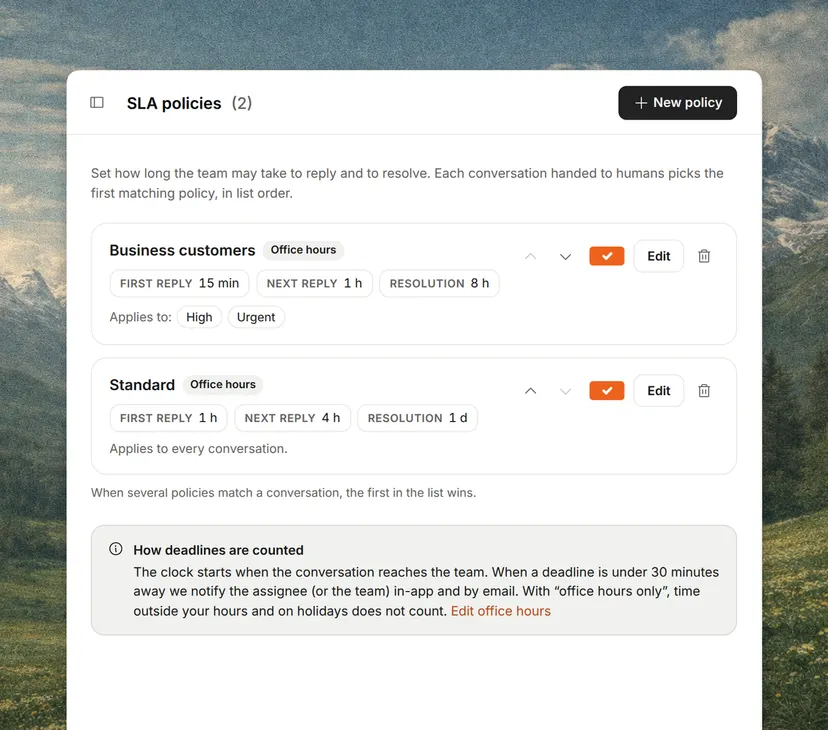
- By customer type, such as accounts with their own service level agreement.
- By specialty, such as billing or technical support.
When you need the first one
When two people work the same list at the same time and have already collided.
Before that, a queue is process that gets configured and used by nobody.
Few, and on a clear criterion
By language or by product works because the criterion is objective.
By "urgency" works badly. Everybody believes their own thing is urgent, and it ends up as one queue with everything in it.
The ownerless queue
The most common failure is leaving a "miscellaneous" queue nobody watches.
Every queue needs somebody responsible for emptying it, or it becomes the place conversations go to die.