Why they are not the same
A bug that stops one small customer from working is high severity and may still not be first in line.
A typo on the largest customer’s invoice is low severity and gets fixed today. When the two scales are merged into one field, everything ends up marked urgent and the scale stops sorting anything.
Why it matters
Without both scales, whoever pushes hardest wins.
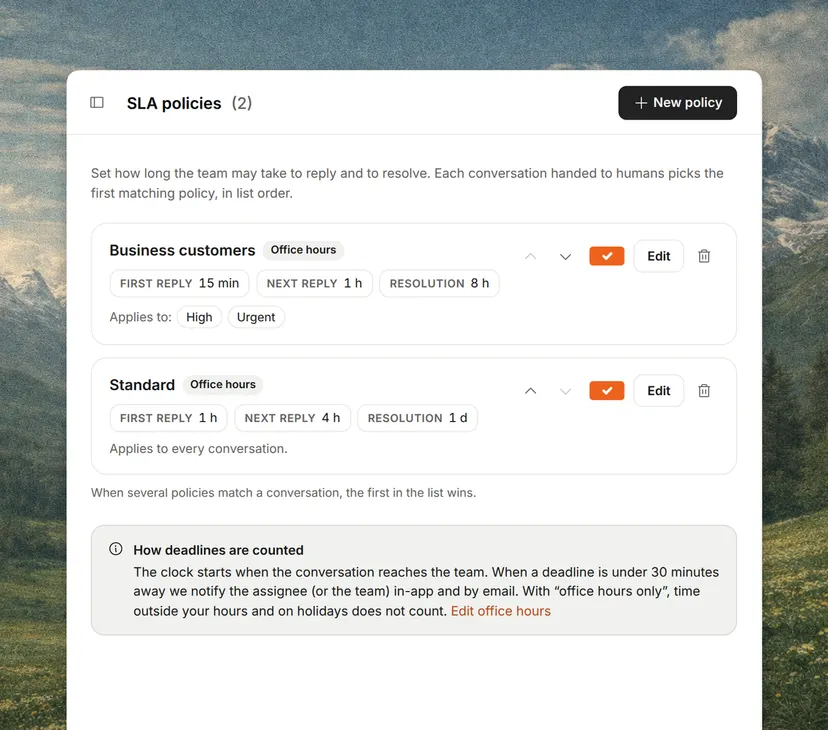
Severity lets support and engineering talk about the same damage in the same words, and priority puts on record why one case goes before another. SLA targets are almost always set by priority.
Severity versus priority
Severity describes the issue and priority describes the decision.
| Severity | Priority | |
|---|---|---|
| What it measures | The damage the issue causes | The order it is handled in |
| Depends on | Impact and whether a workaround exists | Severity, the customer and deadlines |
| Who sets it | Support, against written criteria | Whoever allocates the work |
| Changes over time | Only if the impact changes | Yes, as a deadline approaches |
An example of severity levels
Four levels are usual, defined by what the customer cannot do.
Names vary from one company to the next.
- Critical. The service is down or data is being lost, with no workaround.
- High. A main function fails and the workaround is costly.
- Medium. Something fails but work can continue.
- Low. A minor defect, a question or an improvement request.
How priority is decided
Priority starts from severity and adjusts it with three business facts.
- The commitment. If the customer has an SLA, the deadline rules.
- The reach. How many customers or users are affected.
- The timing. A renewal coming up, a go-live or a month-end close.
Who can change them
The customer describes the impact and the team assigns the level against written criteria.
If anyone can raise priority without justifying it, the scale fills up at the top within weeks.