Not a one-off bug waiting for a patch
Hallucinations get discussed as a defect the next version will fix.
Producing plausible text and inventing are the same capability, so you cannot eliminate them, but you can corner them. Limit where the system gets its data and make it recognize when it does not have any.
Why it matters
In support, a hallucination is a customer acting on something false.
If the system tells them their plan includes something it does not, or gives an invented refund date, what it costs is the complaint afterwards and the trust that goes with it, far more than the ticket.
How to reduce them
They are not eliminated, they are cornered.
Four measures do most of the work.
- Forcing the system to answer only from passages retrieved from the company’s own documentation.
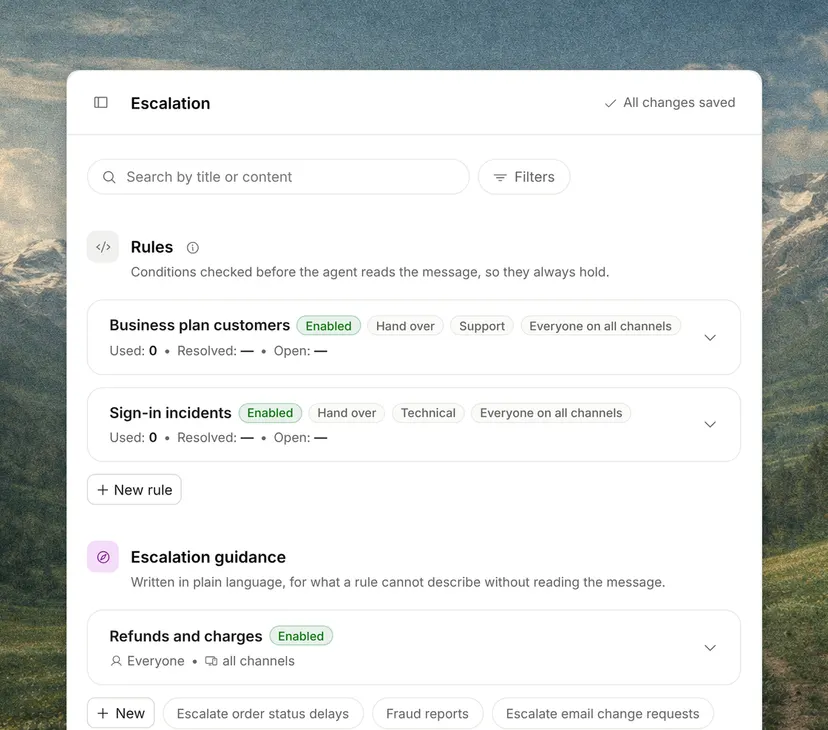
- Giving it a way out when it lacks the fact, which is saying so and handing the conversation to a person.
- Taking figures, deadlines and conditions from a source, never from the model’s wording.
- Reviewing real conversations and testing the hard cases before every change.
The right answer when it does not know
"I do not have that, let me get someone from the team."
A system that says this is more useful than one that is right 95% of the time and invents the other 5% with equal confidence, because the second one forces you to check everything.
Where they hurt most
In numbers and conditions.
Prices, deadlines, limits, coverage. Those are the answers customers act on, and the easiest to sound plausible while being false. Those should always come from a lookup, never from the model’s memory.